


The Alarming Precedent Set by the South Bend Common Council
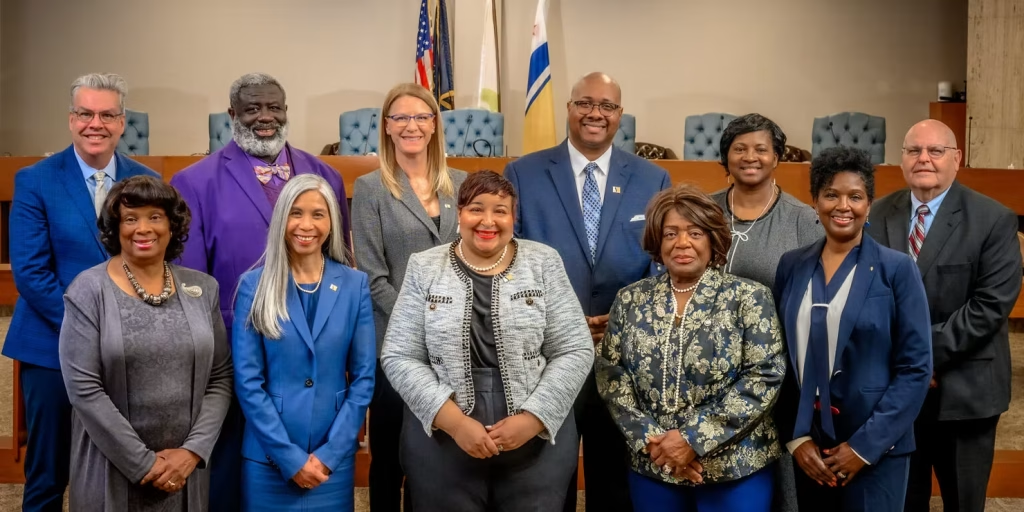
On Monday, October 13th, 2025, the South Bend Common Council set an alarming precedent. They allowed a parade of public comments defending Councilmember Karen L. White after her disturbing remarks about the sitting president. It is important to note that the Council has a documented history of shutting down public comments, even when they are relevant to city business.
White’s statement was reckless. She said, “Okay, and we’re gonna put the orange man. I don’t know where y’all are gonna put him, but I know where I would like to put him. I don’t think jail is good enough.” Many interpreted these words as a call for violence against President Donald J. Trump. Instead of addressing the seriousness of White’s comments, the meeting devolved into a display of blind loyalty, ignoring the gravity of the situation.
A Disturbing Defense
Speaker after speaker stood at the podium not to debate policy, but to lionize Karen White. Trina Robinson, the President of the local NAACP, called President Trump a “clown,” stating, “We have to understand that there is a clown in the White House. And when you have a clown, you expect a circus.” She insisted that White “did nothing wrong.” Others echoed her sentiments, dismissing the outrage as an effort from some “pro-Trump people” who want to “drag my sister’s character through the mud.”
Leadership’s Weak Response
The most unsettling response came from council leadership. South Bend Common Council President Canneth Lee did not defend basic standards of public conduct. Instead, he announced: “We do love Ms. White. She’s an outstanding leader, and we support her.” This was not merely support for a colleague; it was an open acceptance of rhetoric far beneath the dignity of elected office.
By refusing to repudiate White’s comments and instead cheering her on, the South Bend Common Council made it clear that they prioritize loyalty over leadership. This weak-kneed response encourages the toxic idea that inflammatory rhetoric is tolerated in South Bend, as long as it comes from a Democrat.
The Implications of Inflammatory Rhetoric
The implications of such inflammatory rhetoric are significant. When elected officials make reckless statements, they set a dangerous precedent. It undermines the integrity of public discourse. Citizens expect their leaders to uphold standards of conduct that reflect the values of their community. When those standards are ignored, it can lead to a breakdown of trust in government institutions.
The Role of Public Discourse
Public discourse is essential in a democratic society. It allows for the exchange of ideas and fosters a healthy debate on policies. However, when discussions devolve into personal attacks and inflammatory language, it detracts from the issues at hand. The South Bend Common Council’s failure to address White’s comments reflects a broader trend of prioritizing loyalty over constructive dialogue.
Moving Forward
Moving forward, it is crucial for elected officials to recognize the weight of their words. They must understand that their statements can have real-world consequences. Encouraging a culture of accountability and respect in public discourse is vital for the health of democracy.
In conclusion, the South Bend Common Council’s response to Karen L. White’s remarks is a troubling indication of the current state of political discourse. It highlights the need for leaders to prioritize integrity and accountability over blind loyalty. Only then can we hope to foster a more respectful and constructive political environment.

Logan Foster
Logan Foster founded Redress South Bend and reports on local government and public records in South Bend and St. Joseph County. He is 31 years old and is majoring in finance. He is a Cleveland sports fan and a longtime season ticket holder of the Cleveland Cavaliers.